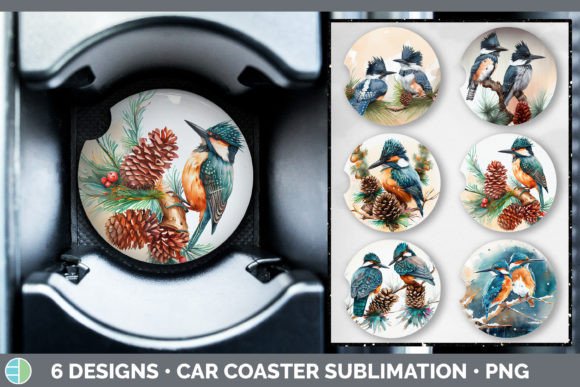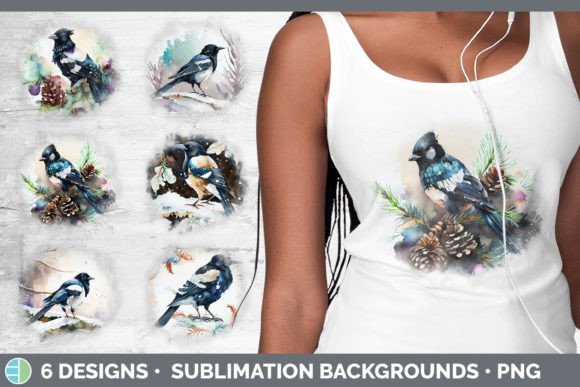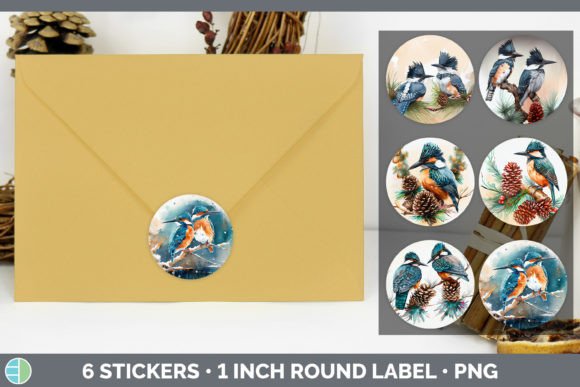
Kingfisher Christmas Stickers: A Designer's Review
As a designer who spends more time staring at stitch maps than most people spend looking at actual art, I approach every new machine embroidery design with a healthy dose of skepticism. We have all been there: you buy a cute graphic online, load it onto your machine, and halfway through the run, you realize the density is going to turn your soft cotton into cardboard. That is why I took a close look at the Kingfisher Christmas Stickers Sticker before committing it to any client work. This isn't just about whether it looks good on a screen; it is about how it performs as a physical embroidery project in the real world.
My first impression of this design, categorized under Illustrations, was that it carries a whimsical, nostalgic mood. The layout feels intentional, mimicking the look of a vintage holiday sticker but translated into thread. For those of us running small shops or selling on Etsy, visual personality is everything. This design doesn't scream "generic clipart." Instead, it has a hand-drawn quality that suggests warmth and tradition. When I visualize this stitched out, I immediately see it working beautifully on items that need a touch of boutique charm rather than corporate uniformity.
Real-World Application: The Holiday Tote Test
To truly evaluate the Kingfisher Christmas Stickers Sticker, I imagined a specific scenario: preparing a limited run of custom canvas tote bags for a local holiday market. Tote bags are a staple for craft business owners because they are practical and highly visible. However, canvas can be tricky. It has a distinct weave, and if your stitch density is too high, the fabric puckers instantly.
In this context, the design shines because of its balanced composition. It doesn't appear to rely solely on massive blocks of fill stitch that would weigh down the bag. Instead, it seems to utilize a mix of textures, likely incorporating satin stitch for outlines and definition, which adds a lovely sheen against the matte canvas. If you are an Etsy seller looking to create a handmade product that stands out in a crowded feed, this kind of visual contrast is gold. The finished product would feel substantial but not stiff, maintaining the drape of the bag while offering a professional, embroidered focal point.
Beyond totes, I can see this design translating well to sweatshirt embroidery. A crewneck sweatshirt in heather grey or deep forest green would provide the perfect backdrop. The "sticker" aesthetic implies a slightly raised, applique-like presence, even if it is purely stitched. This makes it an excellent choice for custom apparel where the customer wants something that looks like a patch but feels integrated into the garment. For baby embroidery projects, such as a holiday onesie or a burp cloth, the scale would need to be checked carefully, but the theme is undeniably sweet and appropriate for personalized gift giving.
Technical Considerations and Fabric Challenges
While the aesthetic appeal is strong, a responsible designer must address the technical hurdles. Where should you use caution with the Kingfisher Christmas Stickers Sticker? First, consider the substrate. If you are stitching on stretchy fabrics like jersey knits or thin performance tees, you must be vigilant about your stabilizer choice. A design with illustrative details requires a stable base to prevent distortion. Without proper hooping and backing, those crisp lines could warp, ruining the "sticker" illusion.
Another area for careful planning is dark fabric. If you intend to stitch this on a black velvet pillow cover or a navy cap, you need to verify the thread colors included in the embroidery file. Does the design rely on white or light threads for highlights? If so, they will pop beautifully against dark backgrounds. However, if there are large areas of dark thread intended for light fabric, stitching them on dark material might require a layer of underlay or even a fabric backing to prevent the garment color from showing through the stitches. This is crucial for maintaining brand consistency and professionalism in your finished product.
Curved surfaces, like baseball caps, present another challenge. The "sticker" shape might have corners or detailed edges that could bunch up on the front panel of a hat if the digitizing isn't optimized for curvature. Before launching a full production run of embroidered patch styles on hats, I would strongly advise running a test on a scrap piece of the same curved material. Check how the running stitch details hold up and ensure the density doesn't cause the brim to curl or the fabric to pucker around the edges.
Enhancing Value and Customer Trust
Ultimately, the goal of using a design like Kingfisher Christmas Stickers Sticker is to elevate the perceived value of your goods. In the world of commercial embroidery and handmade sales, customers pay for quality and uniqueness. A generic, low-resolution graphic converted to stitches often looks messy up close, with jagged edges and poor coverage. In contrast, a well-executed illustrative design builds customer trust. It signals that you care about the details.
This design has the potential to boost buyer engagement simply because it tells a story. It fits the narrative of a cozy, traditional Christmas, which resonates deeply during the holiday season. Whether you are creating holiday embroidery for kitchen towels, aprons, or boutique merchandise, the emotional connection drives sales. Furthermore, for those selling digital embroidery file assets, offering a design that works well across various mediums—from tote bag design to nursery decor—increases its utility and appeal to other makers.
Practical Notes for the Studio
Before you commit to stitching the Kingfisher Christmas Stickers Sticker on a final item, here are my top recommendations for ensuring success:
- Test on Scrap Fabric: Always run a sample on the exact fabric type you plan to use. What looks good on cotton might behave differently on fleece or denim.
- Check Thread Contrast: Review the color map. Ensure there is enough contrast between adjacent colors to maintain clarity, especially in smaller hoop sizes.
- Review Stitch Density: Feel the back of the test stitch-out. If it feels like sandpaper, you may need to adjust your tension or ask the designer for a lighter density version if available.
- Confirm Hoop Size: Ensure the design fits comfortably within your hoop without needing excessive re-hooping, which can lead to alignment issues.
- Inspect Small Details: Look closely at the fine lines. Do they connect properly? Are there any loose jumps that need trimming?
- Mockup Verification: Create a digital mockup in both black and white to see how the design holds up without color reliance. This helps assess the strength of the line work.
- Licensing Check: Since this falls under Illustrations, confirm the licensing terms. Can you sell the finished product commercially? Are there restrictions on the number of units? Never assume; always read the license included with the design assets.
In conclusion, the Kingfisher Christmas Stickers Sticker offers a charming, versatile option for designers looking to add a festive touch to their repertoire. It bridges the gap between digital art and tactile craft effectively. However, like any tool, its success depends on the skill of the operator and the preparation of the materials. By respecting the technical requirements of fabric texture, stabilizer needs, and stitch optimization, you can transform this digital file into a standout small shop product that delights customers and enhances your brand's reputation for quality.